Reader-supported: this guide may contain affiliate links. If you buy through them I may earn a commission at no extra cost to you. How this works.
The quick answer
- Start with one piece: a cast iron skillet or griddle plate for the BBQ, or a Dutch oven if you camp or love stews.
- Dutch ovens cook stews, chilli, bread and roasts on a BBQ, campfire or hob.
- Pre-seasoned cast iron is ready to use. Keep it dry and lightly oiled and it lasts for decades.
- Never put cold water in hot cast iron, and always use heat-proof gloves.
Cast iron holds heat brilliantly, which makes it perfect for cooking over charcoal or a campfire. It turns a BBQ into a frying pan, a griddle or an oven. And because it's practically indestructible, a good piece can last a lifetime. This guide is based on how cast iron works and what's available in the UK, not hands-on testing of every product.
The three pieces worth owning
1. A cast iron skillet
The most versatile piece. Sit it on the BBQ grate to fry eggs and bacon, sear steaks, cook onions and peppers for fajitas, or bake a cobbler. A 25–30cm skillet suits most kettle BBQs.
2. A griddle or plancha plate
A flat cast iron plate that sits over the coals or burners and turns your BBQ into a flat-top. Ideal for smash burgers, breakfasts and anything small enough to fall through the grate. A cheap way to try griddle cooking before buying a gas griddle.
3. A Dutch oven
A heavy cast iron pot with a tight lid. On a BBQ or campfire it works like an outdoor oven: stews, chilli, curries, pot roasts, even bread. Brilliant for camping and for feeding a crowd.
As an Amazon Associate I earn from qualifying purchases.
Our Dutch oven pick
Gusskönig Dutch Oven
Sizes: 4.5L (2–4 people), 7L (3–6), 9L (6–10), 12L (10–16) · Base: with legs or flat · Price: from around £103
Why it's on the list
- Comes pre-seasoned, so it's ready to use
- The lid doubles as a pan
- Comes with care paste and a ring cleaner
- 30-year guarantee for private use
Which version? Choose legs for cooking directly over campfire coals, and a flat base for the BBQ, a hob or the oven.
How to cook with cast iron outdoors
- Heat it gradually. Put cast iron on the grill as the coals come up to heat rather than on a ferociously hot fire, to avoid stressing the metal.
- Use two zones. Set the coals to one side of a kettle so you can move the pan between high heat and gentle heat. Our chimney starter guide shows how to get the coals going.
- Dutch oven on coals: for baking or roasting, put coals underneath and on the lid, so the heat surrounds the food like an oven. For stews and frying, put most of the heat underneath.
- Lift the lid with a proper lid lifter and wear heat-resistant gloves. Cast iron handles get just as hot as the pan.
- Turn food, not the pan. Cast iron is heavy and holds a lot of heat, so move it as little as possible.
Seasoning, cleaning and storage
- Seasoning: the black, non-stick coating comes from layers of oil baked onto the iron. Pre-seasoned pieces are ready to use, and the coating improves the more you cook.
- Cleaning: scrape out food while it's warm, wipe or rinse with hot water, and use a chainmail or ring cleaner for stuck-on bits. A little washing-up liquid is fine on a well-seasoned pan.
- Dry it immediately: on the heat for a minute is best. Then wipe on a very thin layer of oil.
- Never pour cold water into hot cast iron. The sudden change in temperature can crack it.
- Rust? Don't panic. Scrub it off, dry it, oil it and heat it to re-season. Cast iron is very forgiving.
- Storage: keep it somewhere dry, not in a damp shed, with a piece of kitchen roll inside to absorb moisture.
Useful extras
- Heat-resistant gloves: essential for handling hot cast iron.
- A lid lifter: for Dutch ovens, especially with coals on the lid.
- A chainmail scrubber: cleans without stripping the seasoning.
- A trivet or heat-proof board: somewhere safe to put a hot pot down.
Browse BBQ gloves Browse lid lifters Browse chainmail scrubbers
As an Amazon Associate I earn from qualifying purchases.
Cast iron for camping
Cast iron and camping go together. A Dutch oven with legs sits over the campfire coals, and a one-pot stew or chilli is about the easiest way to feed everyone after a day outdoors. Camping is one of my favourite ways to cook outdoors, and one-pot cooking keeps things simple.
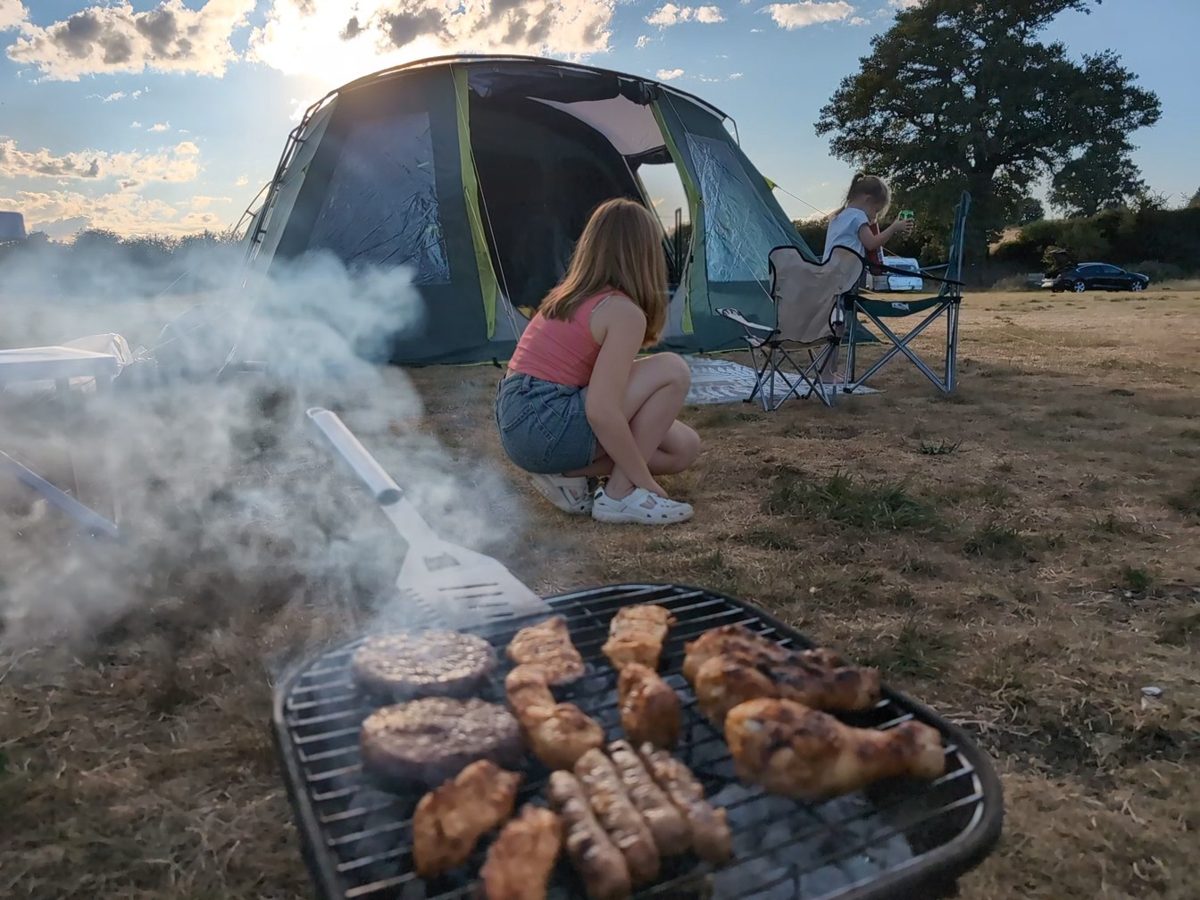
Check the campsite's rules on open fires first. Many only allow raised BBQs or fire pits, and some don't allow fires at all.
Frequently asked questions
Can I use cast iron on a gas BBQ?
Yes. Cast iron works on gas BBQs, charcoal BBQs, campfires, hobs and ovens. Heat it gradually and keep the lid open or closed depending on what you're cooking.
Do I need a Dutch oven with legs?
Only if you'll cook directly on campfire coals. For BBQs, hobs and ovens, a flat-bottomed Dutch oven is more versatile.
Is pre-seasoned cast iron ready to use?
Yes. Give it a rinse and dry it, then cook. The seasoning improves every time you use it.
Why is my cast iron sticky?
Usually too much oil was left on during seasoning. Heat the pan until the oil smokes off, wipe it, and use thinner layers in future.

Home cook, keen DIYer and long-time website builder, writing practical outdoor cooking guides for UK gardens. More about me.