Reader-supported: this guide may contain affiliate links. If you buy through them I may earn a commission at no extra cost to you. How this works.
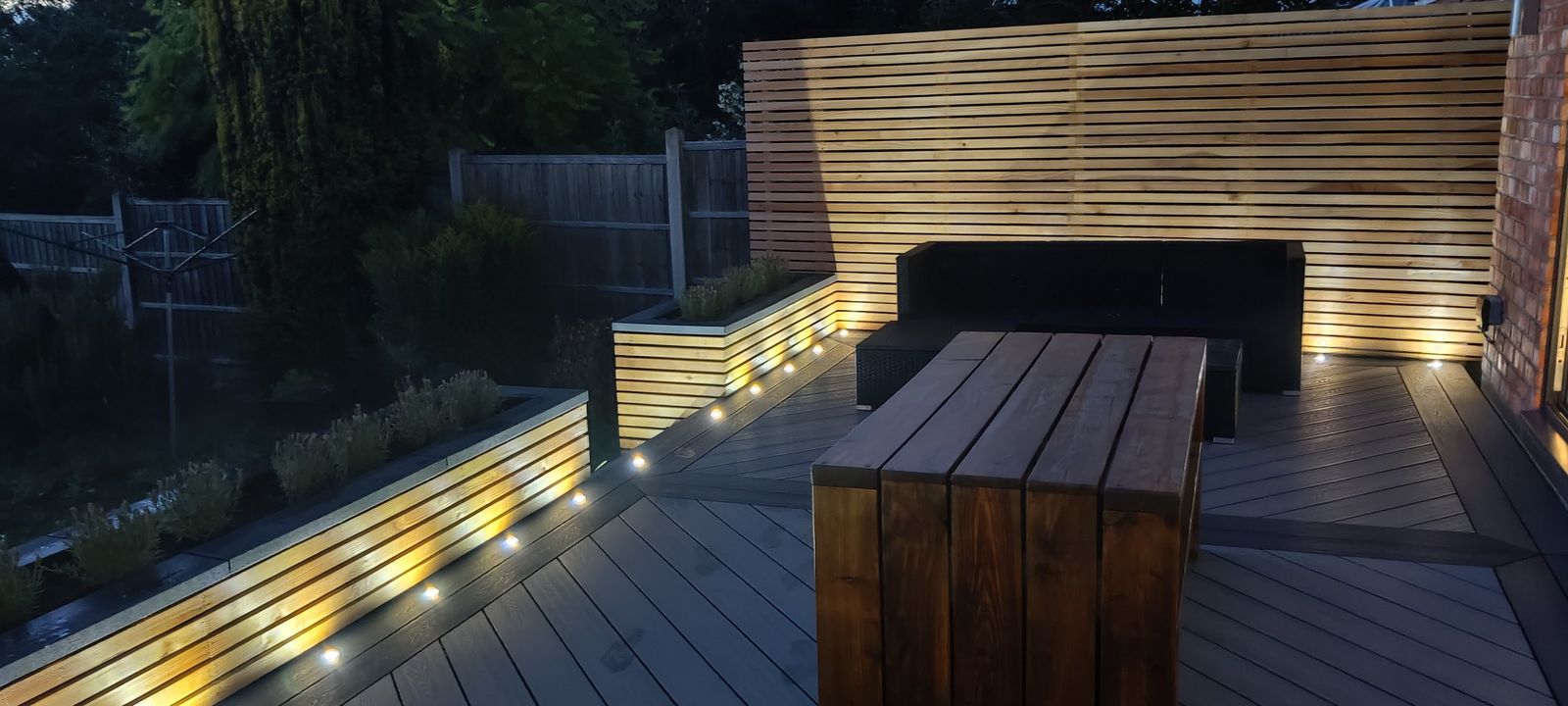
The build at a glance
- Size: 10m × 4m, with raised flower beds on the garden side.
- Posts: composite posts concreted into the ground, so they won't rot.
- Frame: treated timber, with tape on top of the joists to stop rot, resin-bolted to the back of the house.
- Underneath: weed membrane pinned down, and fine mesh around the outside to keep rodents out.
- Finish: composite decking, perimeter deck lights, and slatted Siberian larch cladding that wraps around the beds and fence.
This is the deck behind my house, where my Weber lives. I designed it, made it and built it myself: the frame, the raised beds, the cladding and the privacy screen. I bought the composite decking, then cut and fitted it myself too. Here's how it came together, step by step, with photos from the build.
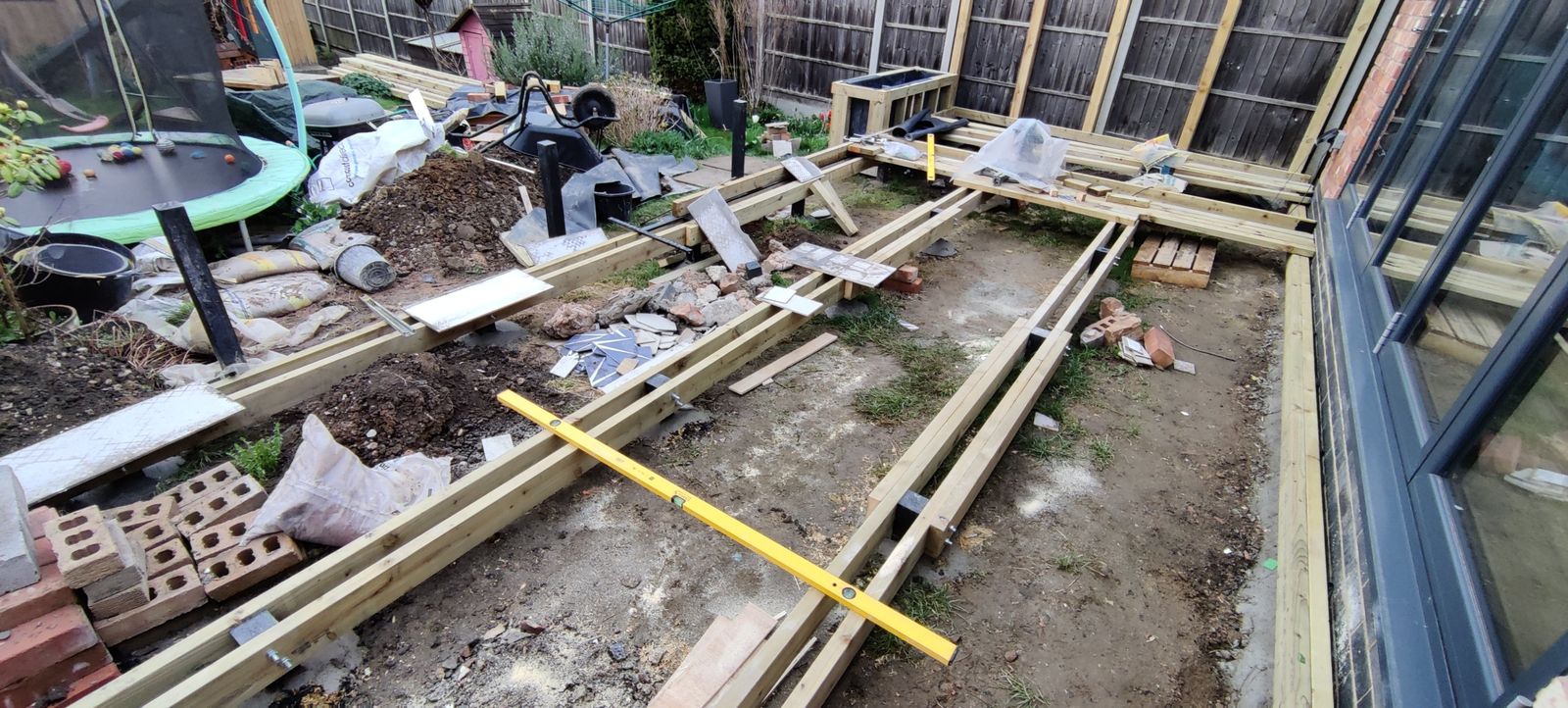
1. Composite posts set in concrete
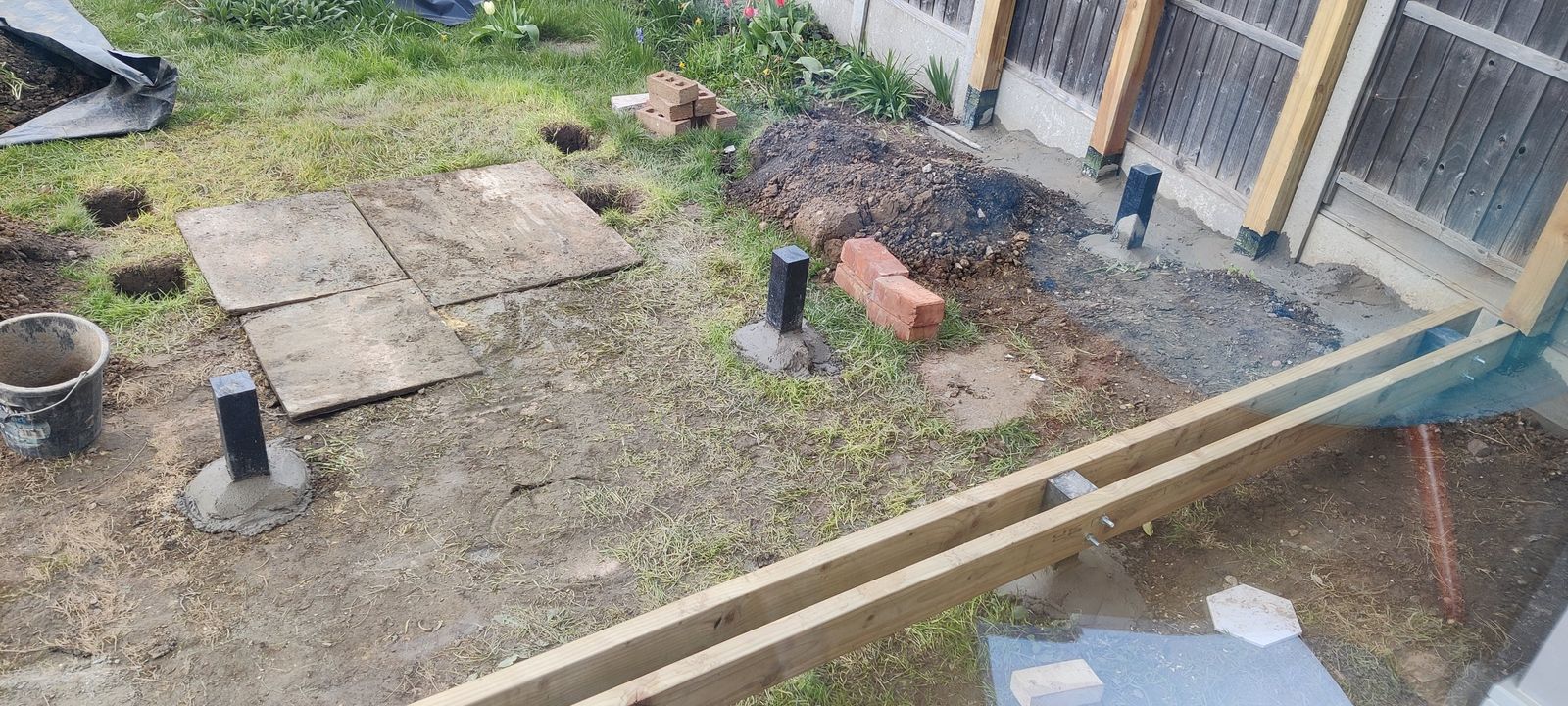
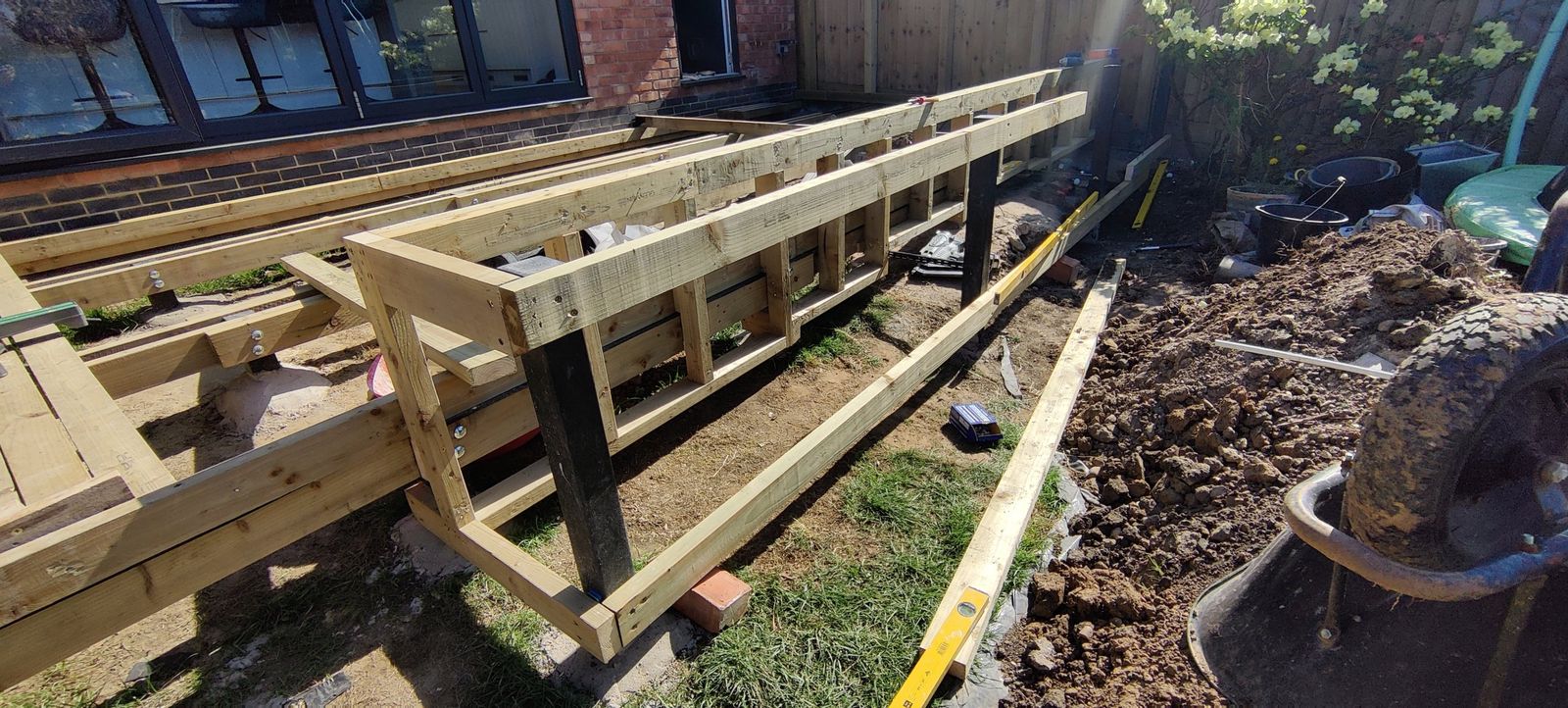
The deck sits on composite posts concreted into the ground. I chose composite rather than timber posts because they won't rot where they meet the soil, which is usually the first part of a deck to fail.
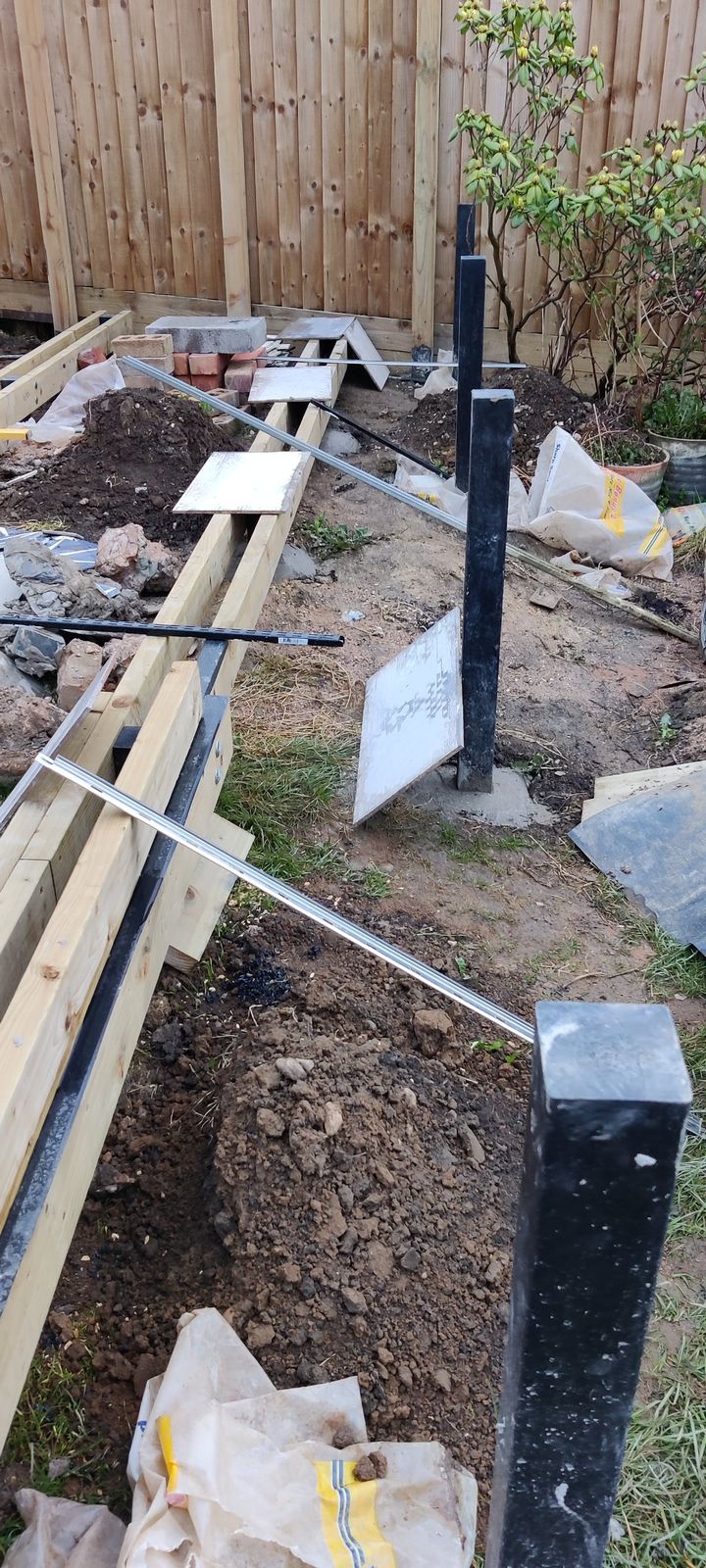
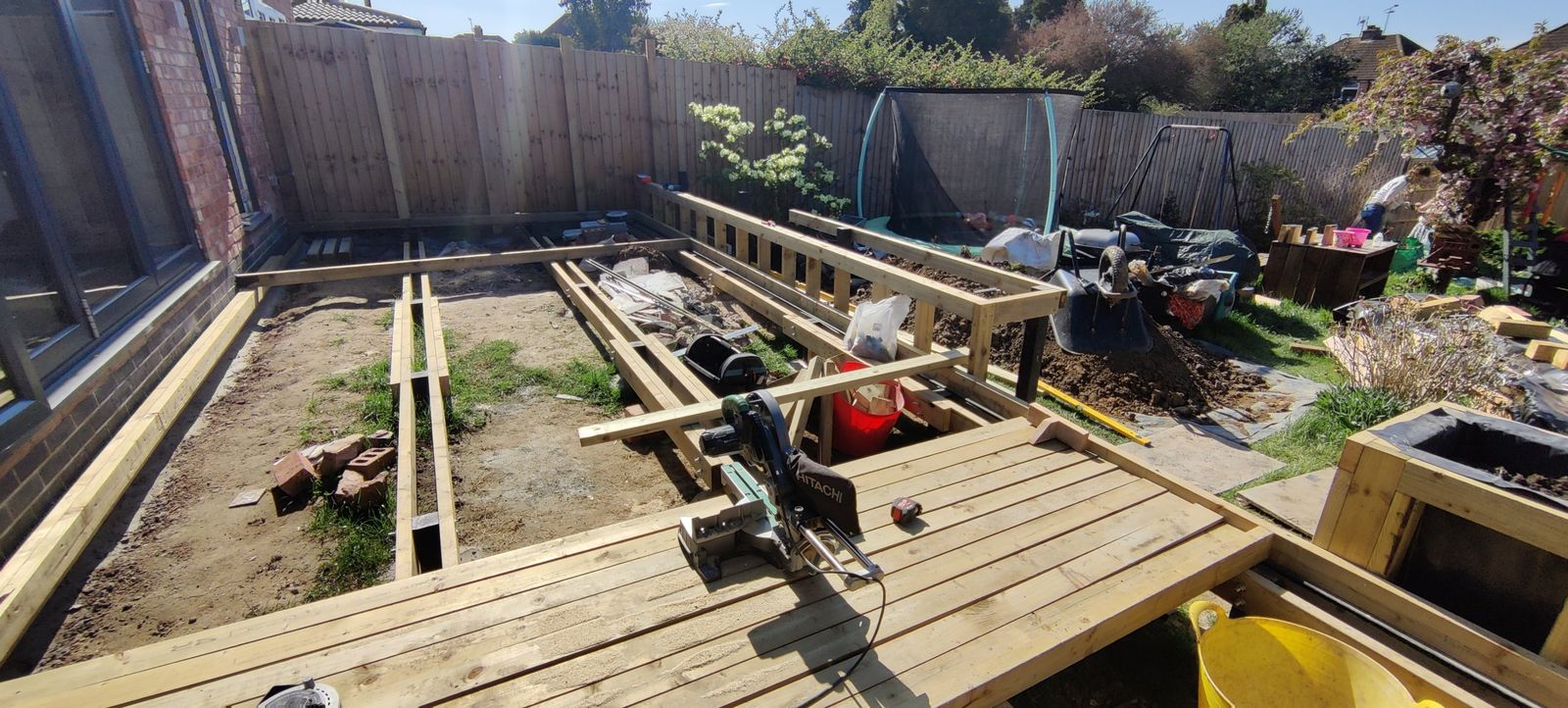
2. The timber frame
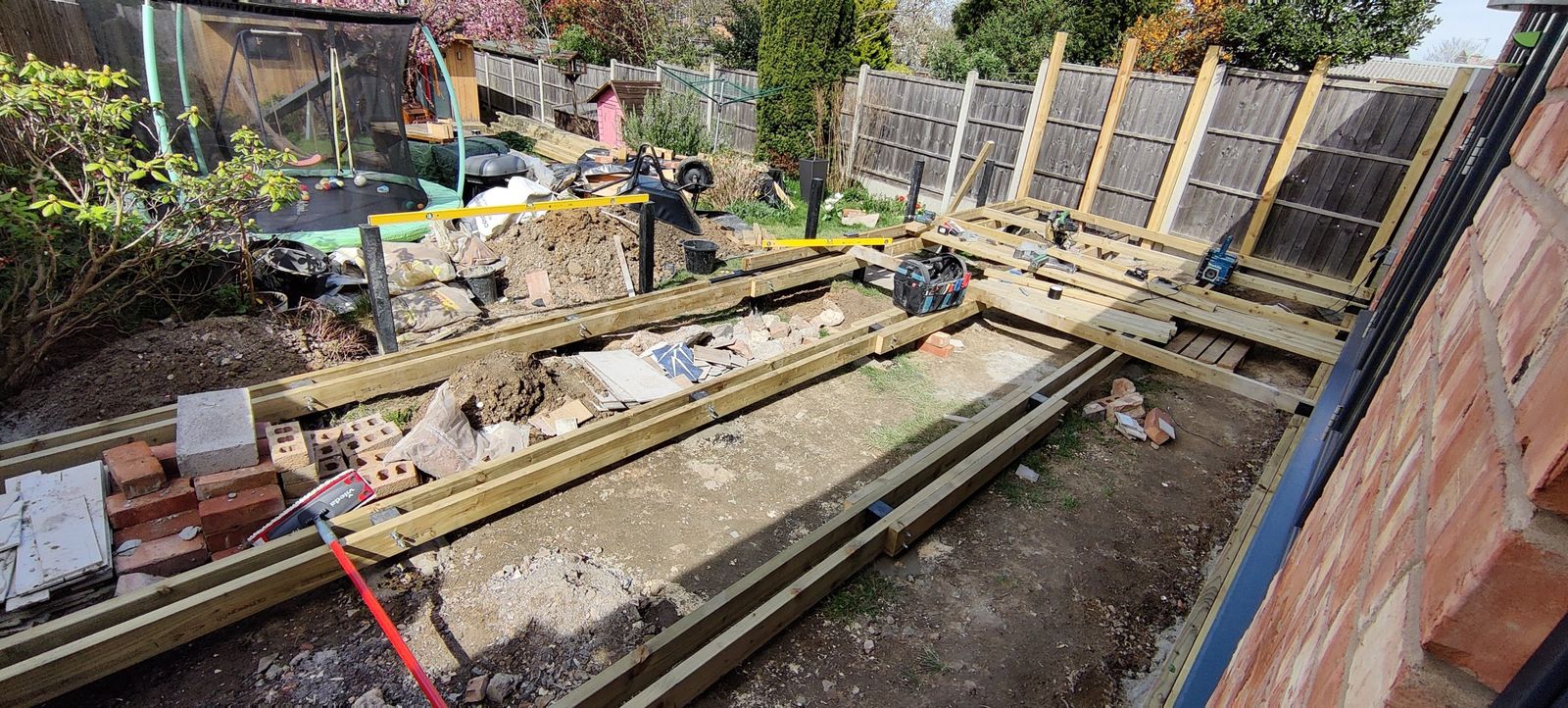
The frame is treated timber, supported on the composite posts. Where it meets the house, it's resin-bolted to the back wall. Getting the frame level matters, because any error shows up in the finished boards.
3. Stopping rot, weeds and rodents
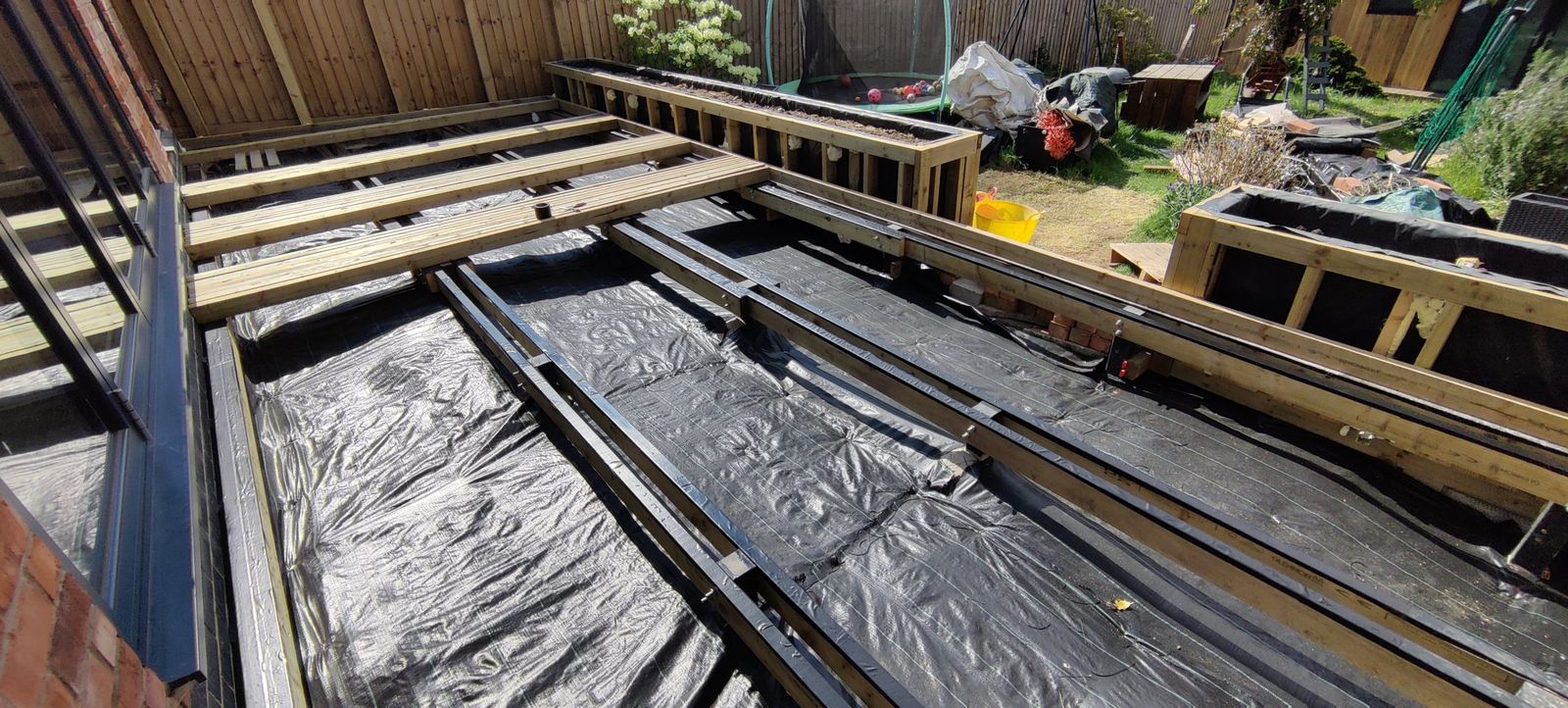
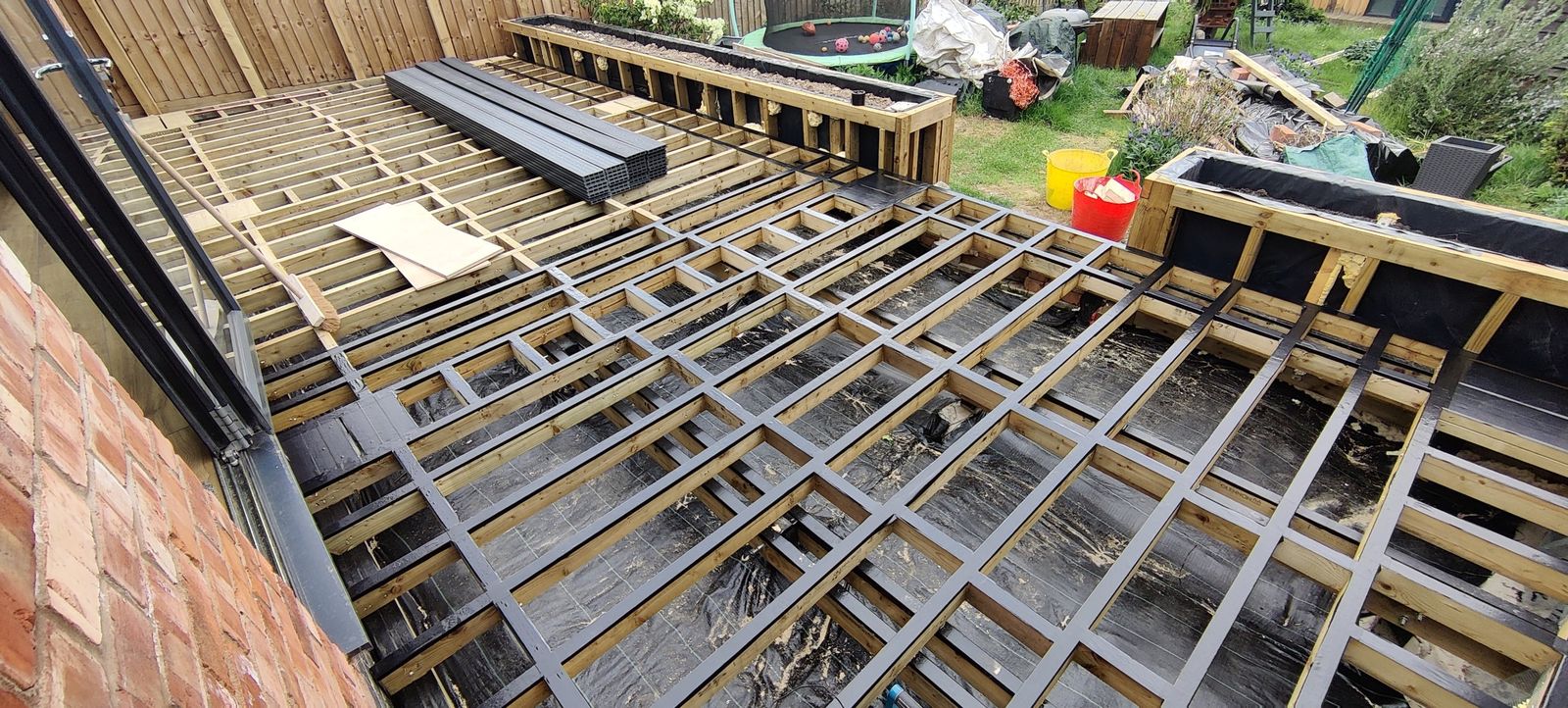
A deck spends its whole life in the British weather, so I put a lot of effort into protecting what you can't see:
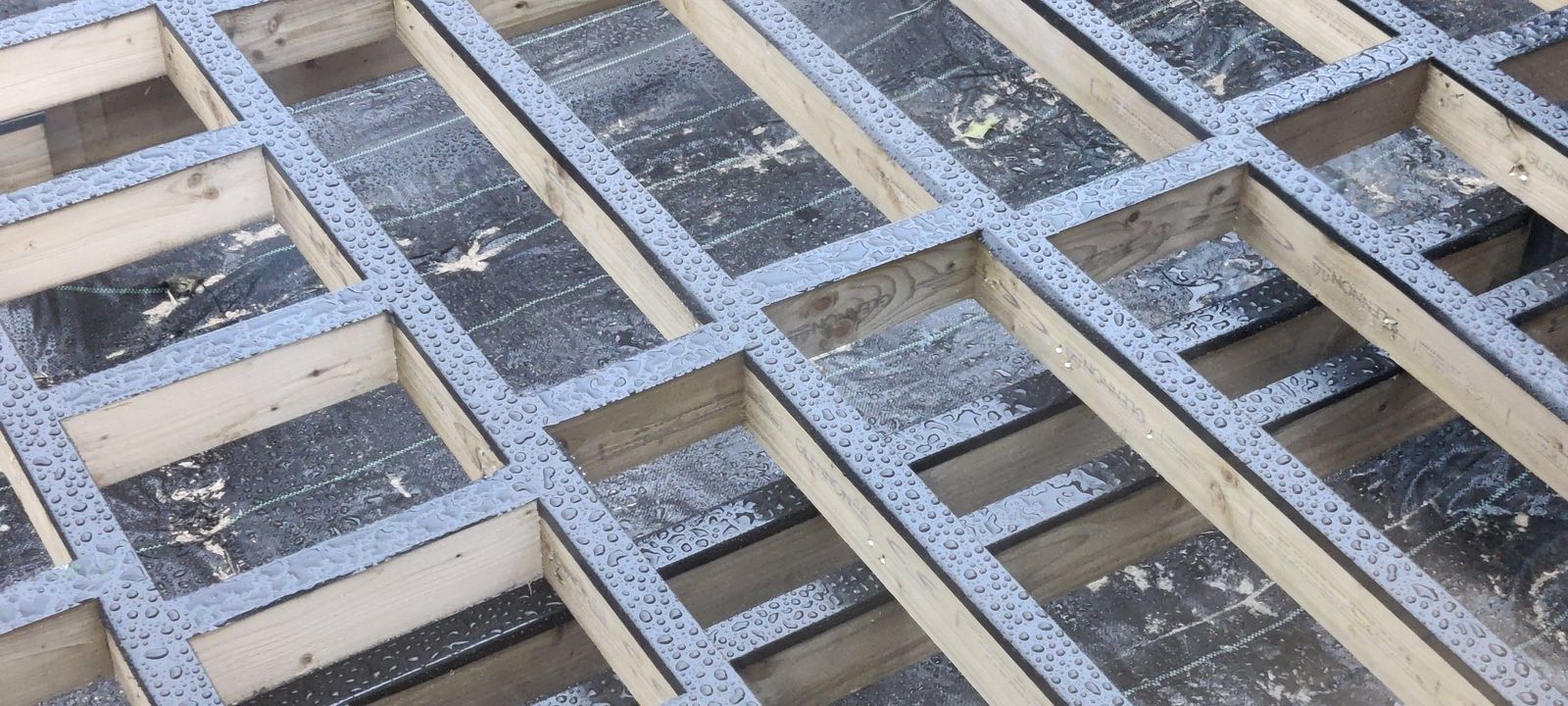
- Tape on top of the joists. Plastic joist tape stops water sitting on the top of the timber, where screws go in and rot usually starts.
- Weed membrane pinned down underneath, so nothing grows up through the deck.
- Fine mesh wire around the outside, to stop rodents and other animals getting underneath.
4. Raised flower beds
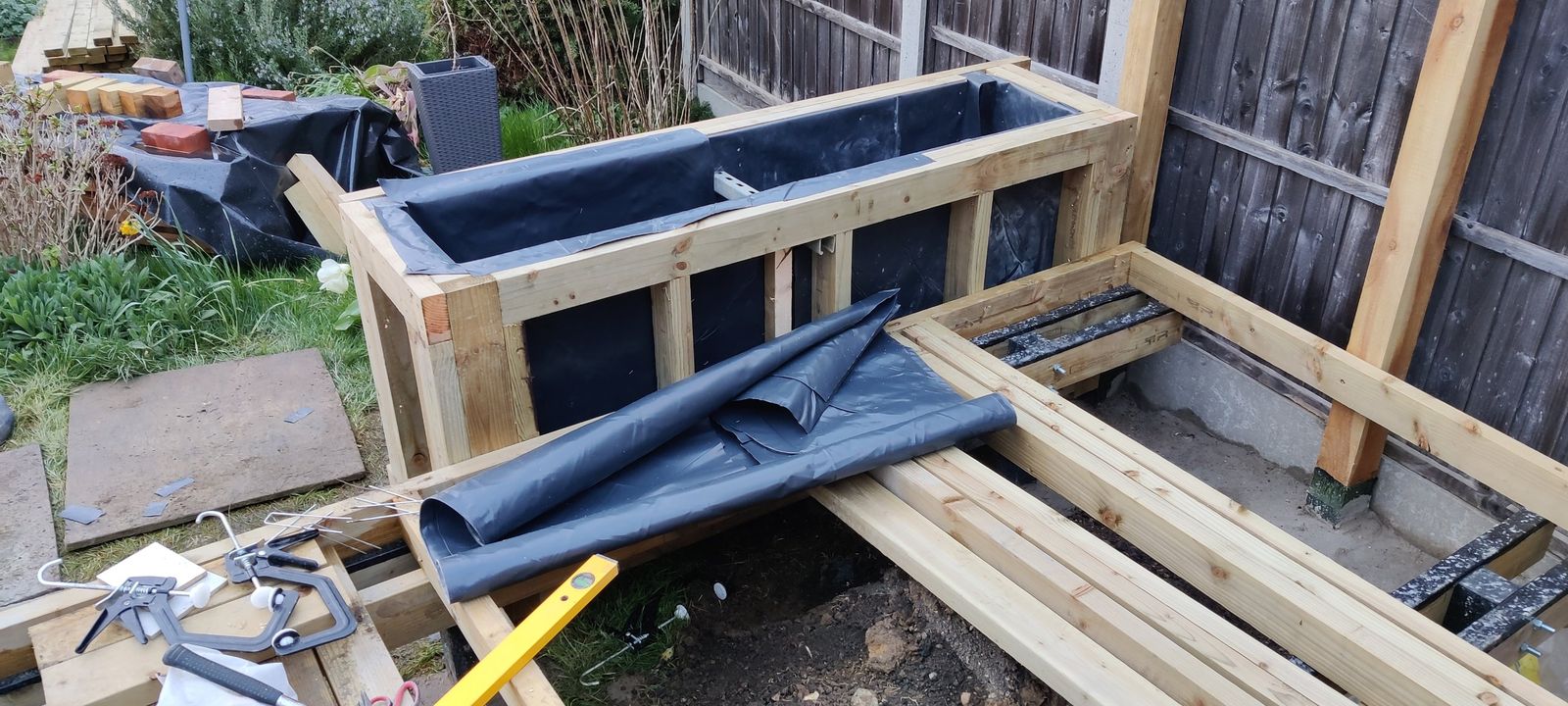
The raised beds run along the garden side of the deck. They're built from timber and lined with thick plastic so the wet soil doesn't rot the frame. Soil is heavy, so each bed has metal supports running from one side to the other to stop the weight pushing the sides apart. The outside of the beds is lined with thick plastic too, before the cladding goes on.
5. Composite decking
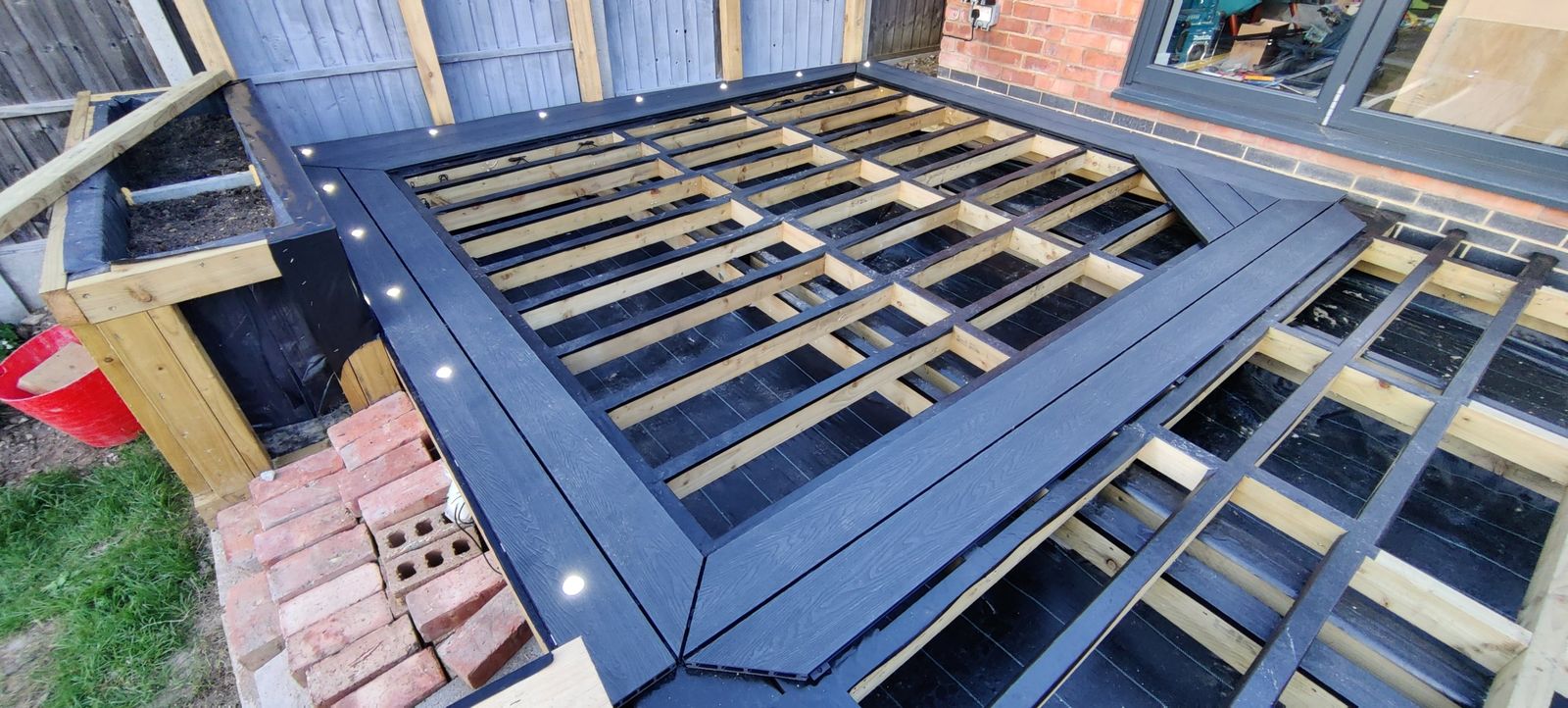
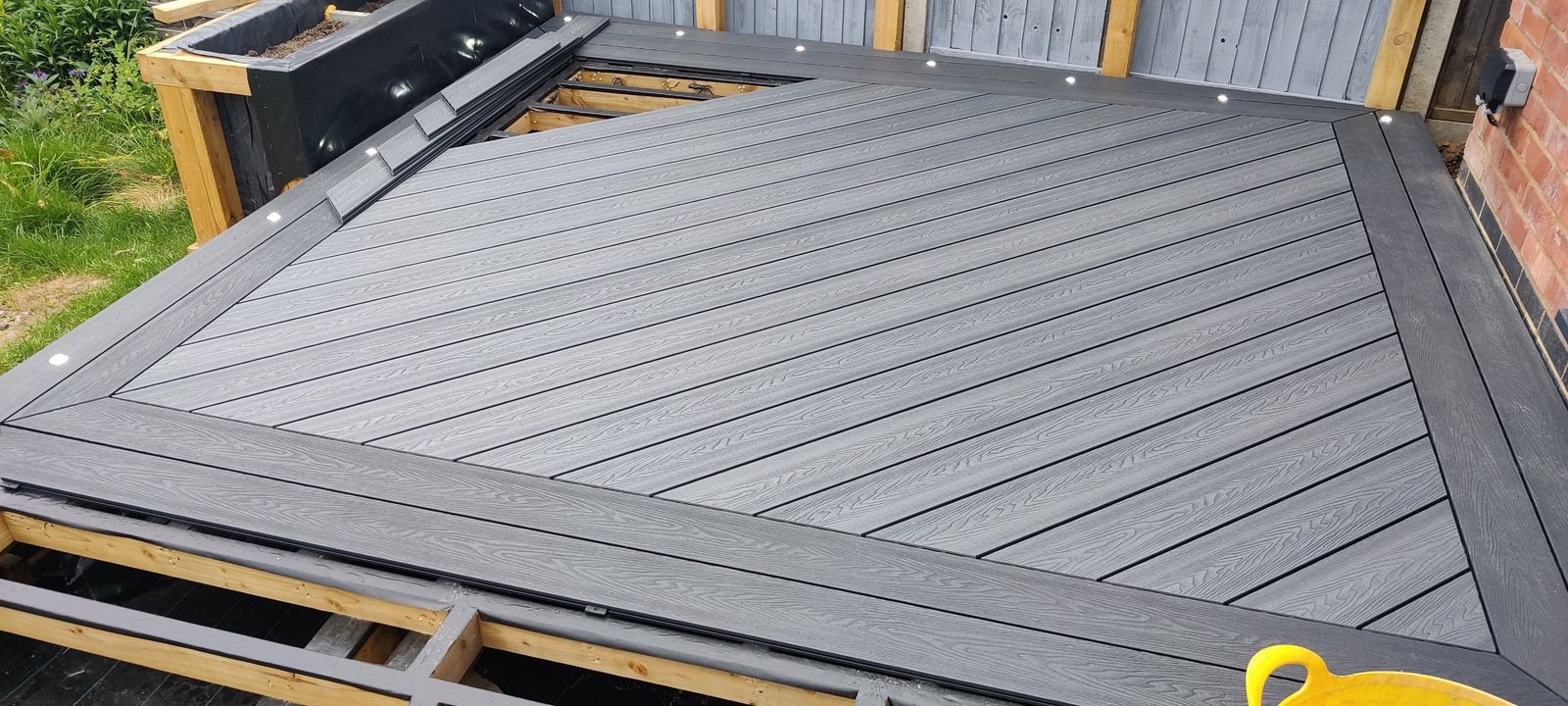
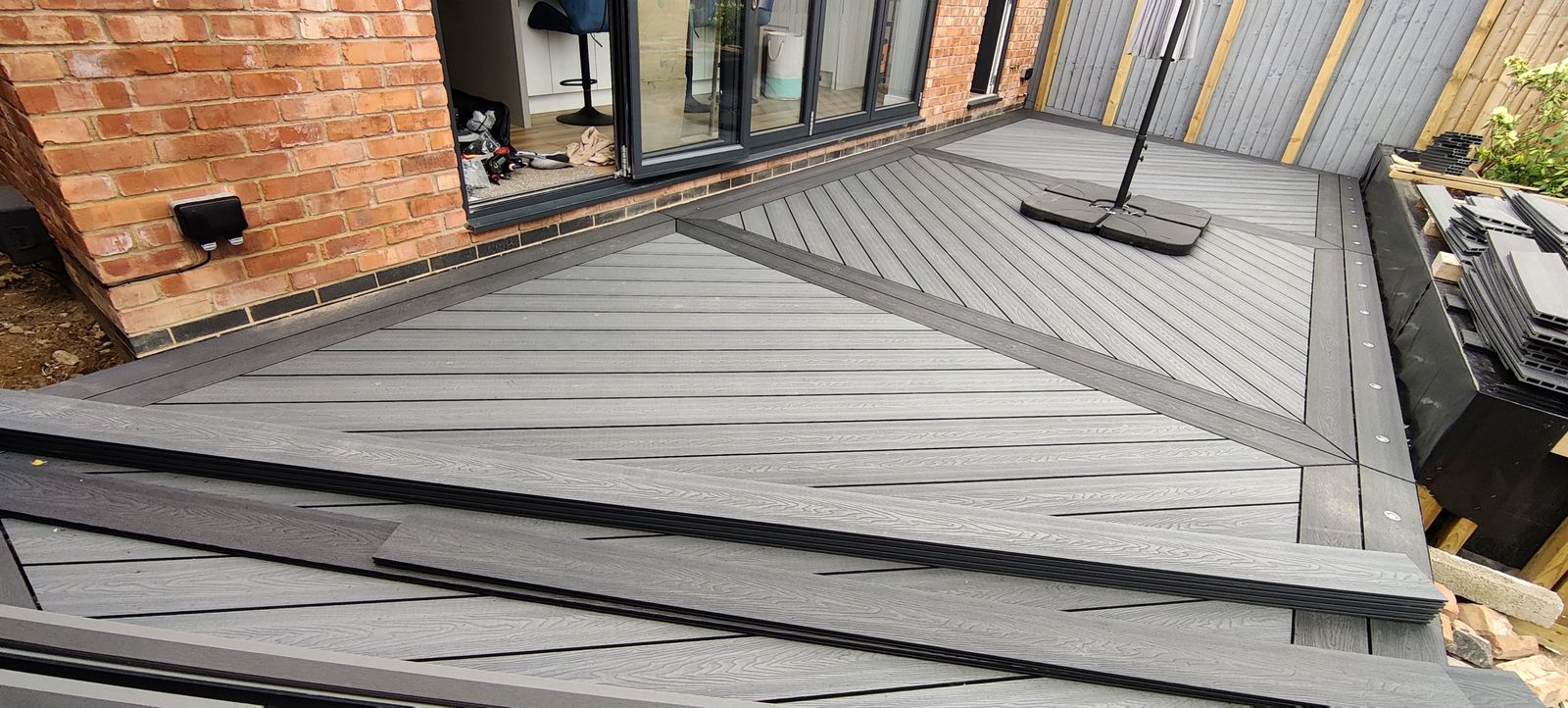
I cut and fitted all the composite boards myself. I laid a picture-frame border first, then filled the sections with boards on the diagonal, with darker boards marking out the shapes. Diagonal boards take more cutting than straight runs, but they give the deck a lot of character.
6. Slatted cladding, screen and lights
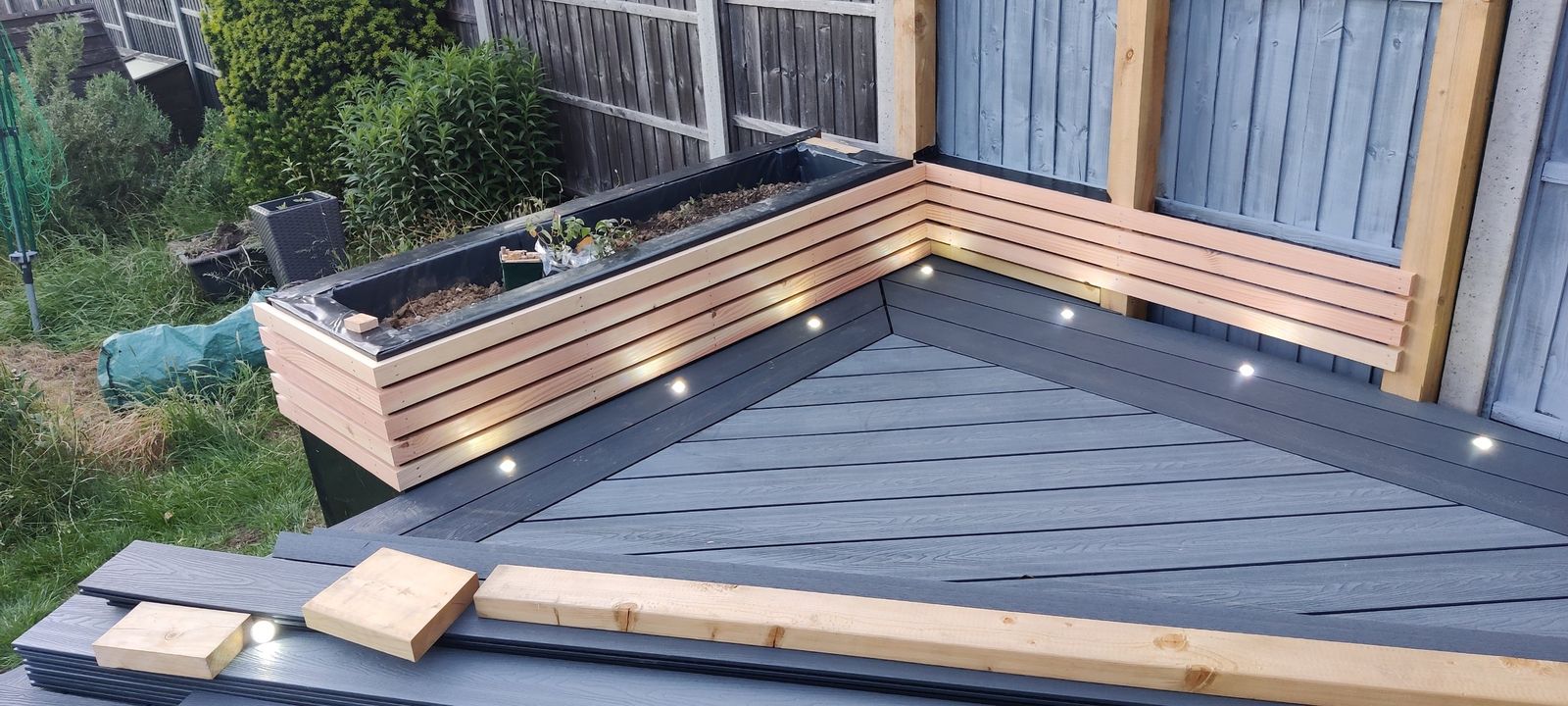
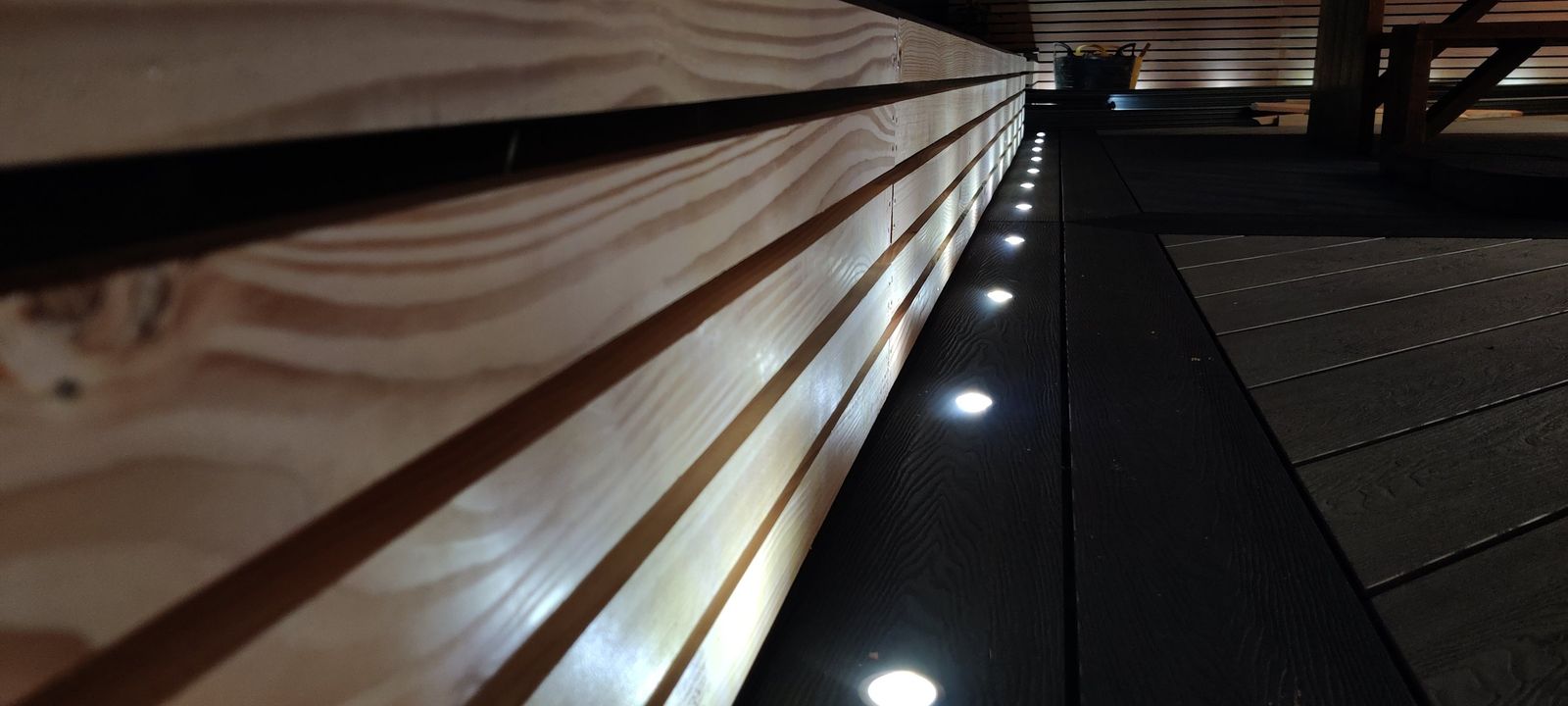
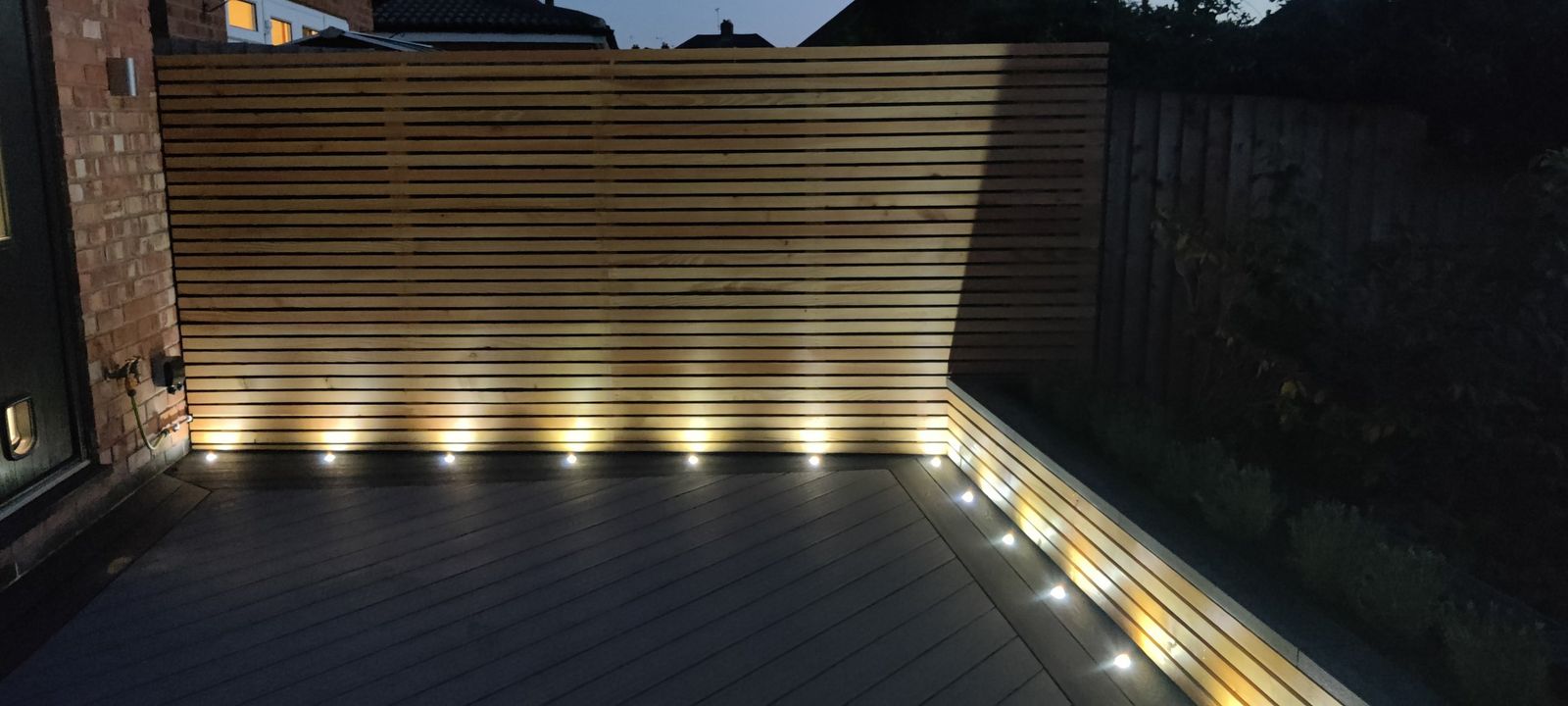
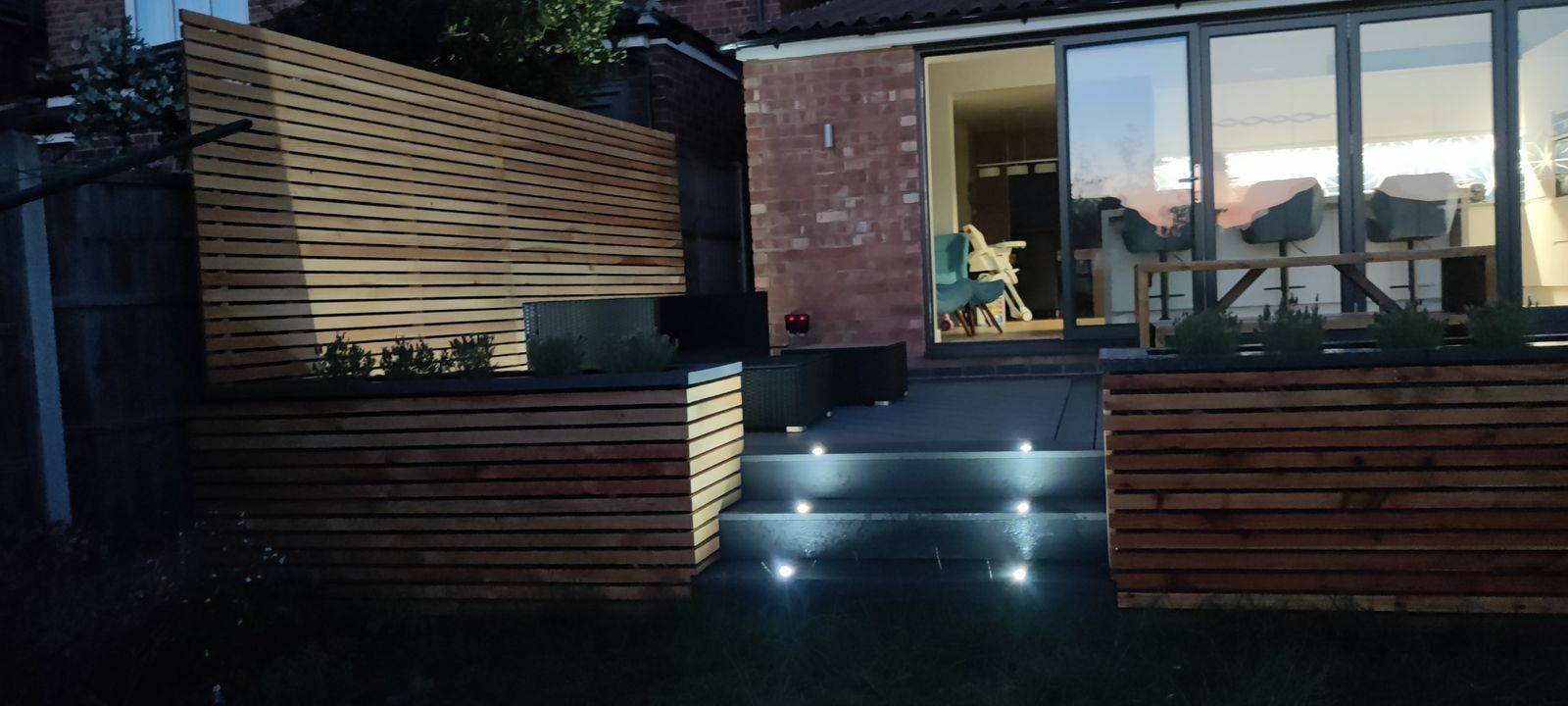
The finishing touch is horizontal slatted Siberian larch cladding. It covers the outside of the raised beds, and on each side of the deck I put in five 100mm fence posts and clad them the same way to make privacy screens. The slats join up and flow around the corners, all the way around the fence and the beds. Deck lights run around the outer edge and light up the cladding at night.
Kit for a similar build
- Joist tapeProtects the tops of joists from waterView on Amazon
- Weed control membraneStops weeds growing up under the deckView on Amazon
- Recessed deck lightsLow-voltage lights set into the boardsView on Amazon
- Heat-resistant BBQ matProtects decking under a BBQView on Amazon
As an Amazon Associate I earn from qualifying purchases.
7. Steps down to the garden
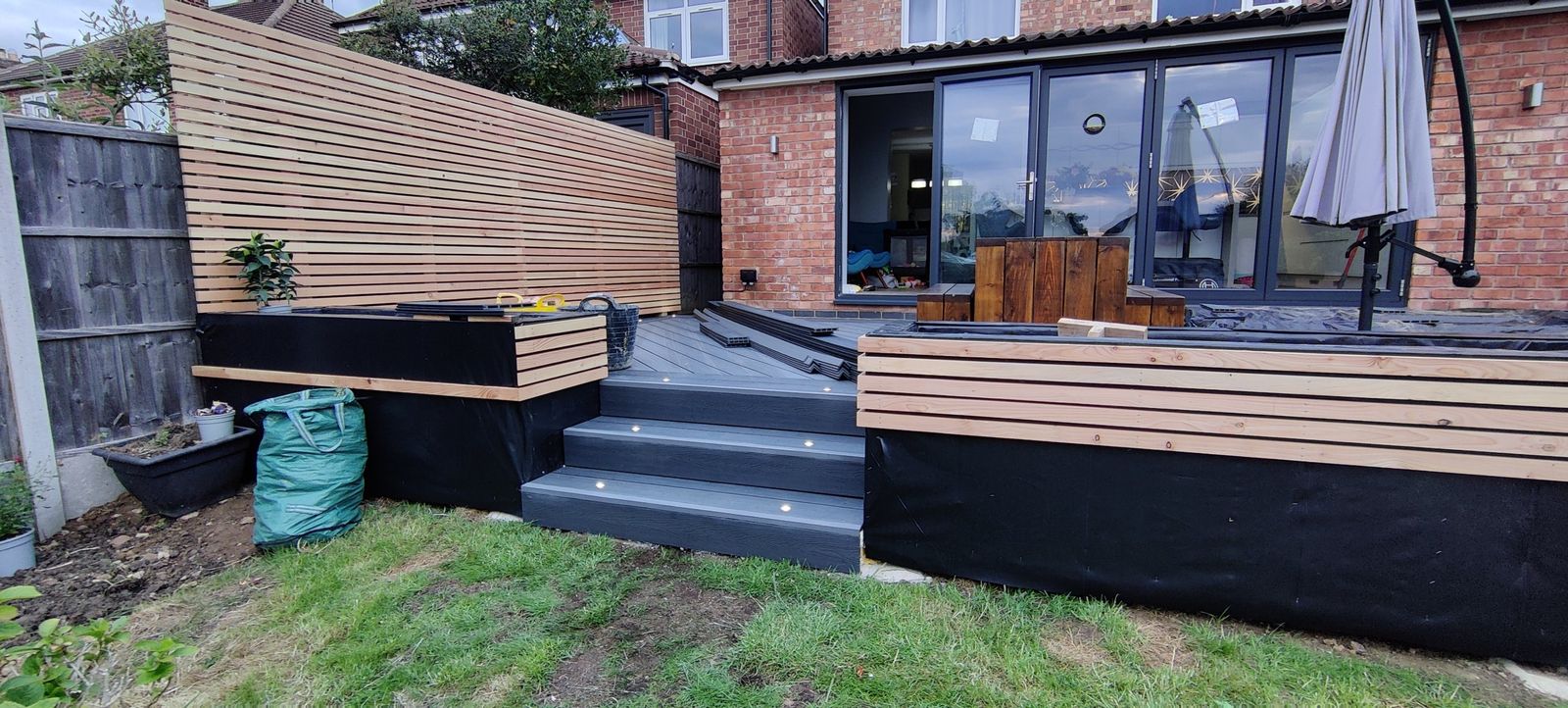
The deck sits above the lawn, so I built composite steps down to the garden between the two raised beds, with lights set into each step.
Cooking on the deck
The deck is where my Weber Master-Touch lives, and where I've cooked a lot of the recipes on this site. If you're planning something similar with cooking in mind, these guides will help:
- How to plan an outdoor kitchen
- Outdoor kitchen ideas for small gardens
- How to lay a base (for heavier builds like a BBQ island)
- Pergola vs gazebo vs awning for shelter
Frequently asked questions
How big is the deck?
It's 10m × 4m, with raised flower beds along the garden side and steps down to the lawn.
Why use composite posts?
Composite posts don't rot where they meet the ground, which is where timber posts usually fail first.
What is joist tape for?
It covers the top of each joist so water doesn't sit on the timber or get in around the screws, which helps the frame last longer.
Can you put a BBQ on composite decking?
You can, with care. Use a BBQ with legs or a stand, put a heat-resistant mat underneath, and check your decking manufacturer's guidance.

Home cook, keen DIYer and long-time website builder, writing practical outdoor cooking guides for UK gardens. More about me.