Reader-supported: this guide may contain affiliate links. If you buy through them I may earn a commission at no extra cost to you. How this works.
The short list
- Must-haves: a peel, an infrared thermometer, a cover and a cutter.
- Nice to have: a stand or table, dough boxes, scales, 00 flour and a stone brush.
- Don't forget fuel: gas, kiln-dried hardwood, lumpwood charcoal or food-grade pellets, depending on your oven.
- Skip: big bundled accessory kits full of things you won't use.
Most pizza ovens come with very little in the box, and the extras can add up quickly. This list covers what's worth buying first, based on how pizza ovens work and what owners recommend. If you're still deciding on an oven, start with how to choose a pizza oven or pizza oven vs kitchen oven.
The essentials
1. A pizza peel (or two)
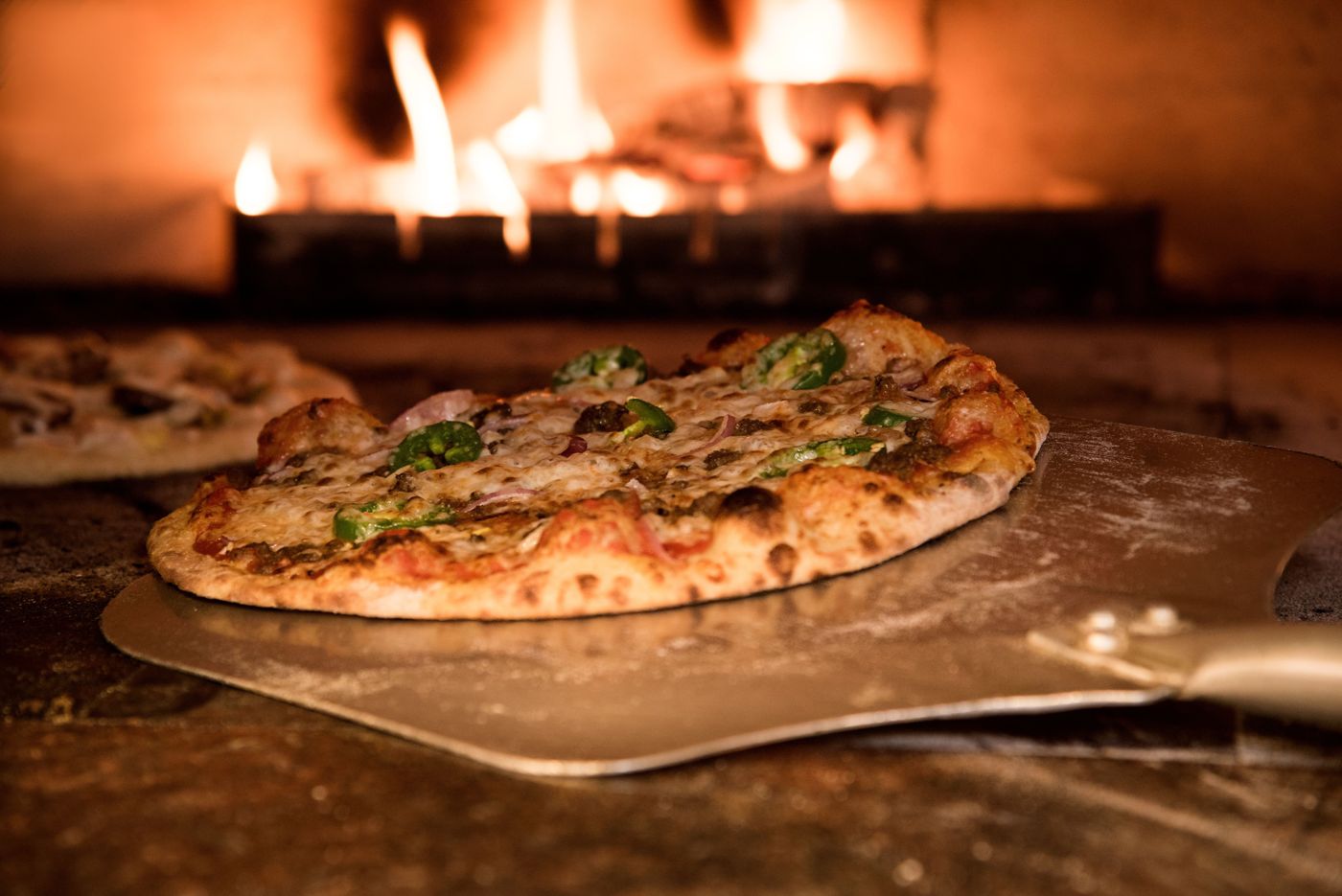
You need a peel to slide the pizza in and get it out. Many people use two: a wide wooden or perforated metal peel for launching, and a small round “turning” peel for spinning the pizza inside the oven so it cooks evenly. A perforated metal peel lets excess flour fall away, which helps stop the base burning.
2. An infrared thermometer
The air temperature gauge on an oven doesn't tell you how hot the stone is, and the stone is what cooks the base. Point an infrared thermometer at the floor before you launch. Around 400°C+ suits thin Neapolitan-style pizzas; a bit lower suits thicker bases.
3. A cover
Most pizza ovens live outside. A fitted, waterproof cover keeps rain off and stops the stone getting damp, which can crack it the next time it heats up. Make sure the oven is completely cool before covering it.
4. A pizza cutter or rocker
A big rocker blade cuts through a crisp, charred crust in one press without dragging the toppings off. A good wheel cutter works too.
As an Amazon Associate I earn from qualifying purchases.
Worth adding next
5. A stand or table
Tabletop ovens need a sturdy, heatproof surface at a comfortable height. A metal pizza oven table with a lower shelf for fuel and tools is a tidy solution if you don't have an outdoor worktop. See pizza oven bases and stands.
6. Dough boxes and digital scales
Weighing flour, water, salt and yeast is the easiest way to get consistent dough. Lidded dough boxes let balls prove without drying out and stack neatly in the fridge.
7. 00 flour
Fine “tipo 00” pizza flour gives a soft, stretchy dough that suits very hot ovens. Strong white bread flour works well too, especially for kitchen ovens.
8. A brush for the stone
A long-handled brush with brass or stainless bristles sweeps burnt flour and cheese off the hot stone between pizzas.
9. Heat-resistant gloves
For adjusting a wood fire, moving a hot oven door or handling a hot peel. Choose gloves rated for contact heat, not standard oven gloves.
As an Amazon Associate I earn from qualifying purchases.
Fuel for your oven
- Gas ovens: most run on propane. Check which regulator and hose your oven needs, and keep a spare bottle so you don't run out mid-party.
- Wood-fired ovens: use kiln-dried hardwood, cut small for small ovens. Damp or green wood smokes and won't reach temperature.
- Pellet ovens: use food-grade hardwood pellets and keep them dry. Damp pellets swell and jam the hopper.
- Charcoal: lumpwood lights quickly and burns hot. Many multi-fuel ovens start on charcoal and add wood for flames.
More on fuel costs in how much it costs to run a pizza oven.
Pizza oven fuel at The Range
The Range's pizza oven section includes wood pellets, pizza oven kindling and hardwood sticks alongside the ovens themselves.
What to skip
- Huge accessory bundles. They often include flimsy peels and gadgets you won't use. Buy two or three good pieces instead.
- Extra pizza stones for a pizza oven. It already has one built in.
- Lighter fluid. It taints the flavour. Use natural firelighters or kindling.
Frequently asked questions
What size pizza peel do I need?
Choose a peel that's at least as wide as the pizzas you make, but small enough to fit through your oven's opening. For a 12-inch oven, a 12-inch peel is the usual choice.
Do I need an infrared thermometer for a pizza oven?
It's not essential, but it's the easiest way to know the stone is hot enough. Built-in gauges usually read the air temperature, not the floor.
Wooden or metal pizza peel?
Wooden peels are less sticky for launching raw dough. Thin metal peels, especially perforated ones, are better for turning and retrieving pizzas. Many people own one of each.
Can I leave my pizza oven outside?
Many are designed to live outside, but a waterproof cover protects them and stops the stone getting damp. In winter, storing it in a shed or garage helps it last longer.

Home cook, keen DIYer and long-time website builder, writing practical outdoor cooking guides for UK gardens. More about me.