Reader-supported: this guide may contain affiliate links. If you buy through them I may earn a commission at no extra cost to you. How this works.
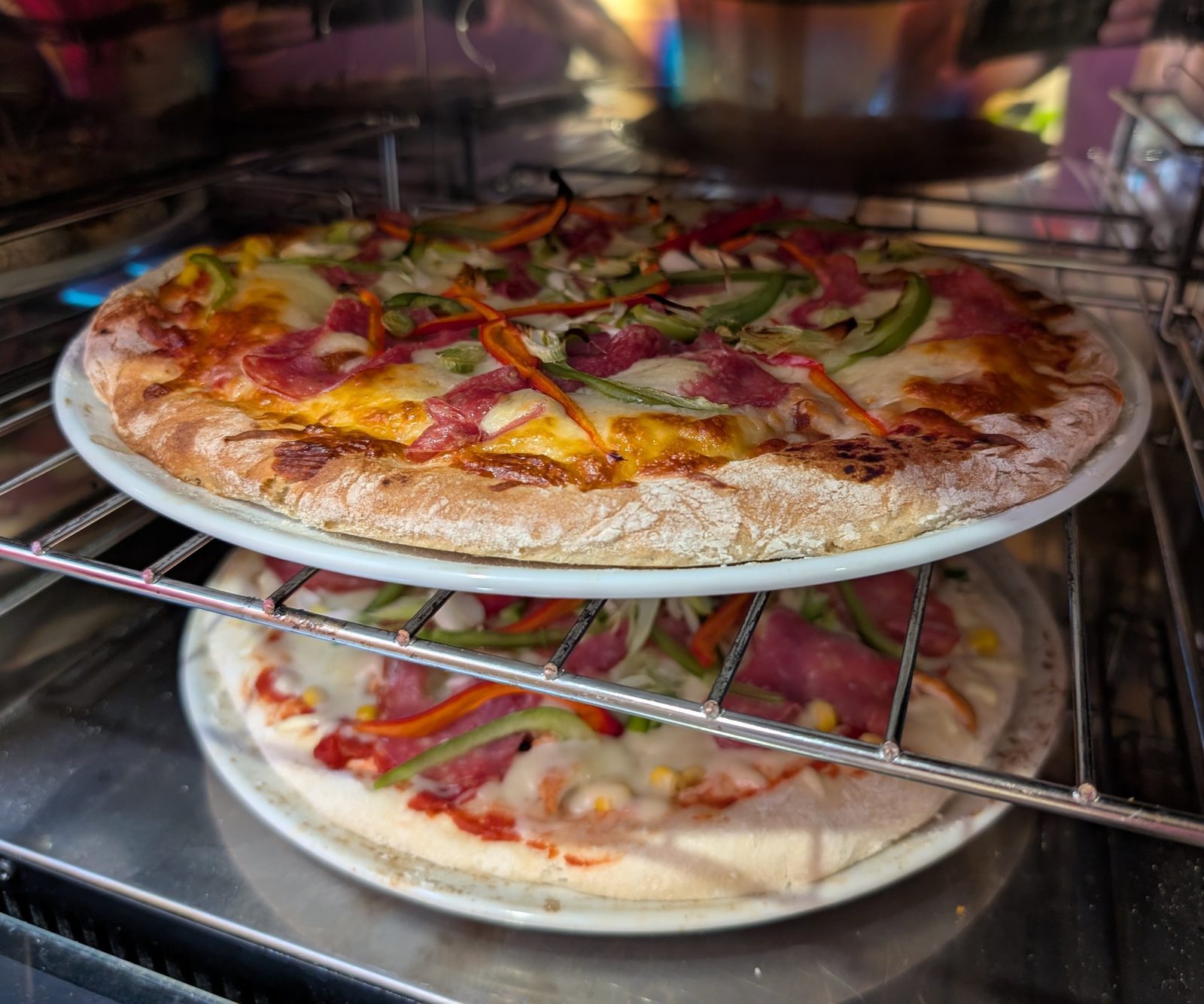
The quick answer
- The big difference is heat. Most kitchen ovens top out at around 220–250°C. Outdoor pizza ovens reach 400°C or more.
- That changes the cooking time from roughly 8–15 minutes to as little as 60–90 seconds for a thin Neapolitan-style pizza.
- A kitchen oven is still great for tray pizzas, thick bases and loaded toppings.
- A pizza oven is worth it if you want a puffy, charred crust and you'll make pizza regularly, especially for groups.
- Beginners: a gas-fuelled 12-inch oven is the easiest place to start.
Every pizza I've made so far has been in my kitchen oven, from big tray pizzas loaded with toppings to a Halloween pizza with mushroom “skulls”. They taste great, and you don't need special kit to make them. But if you've seen pizza oven videos and wondered whether it's really that different, this guide explains what changes, based on how the two types of oven work and what owners report.
Kitchen oven vs pizza oven
| Kitchen oven | Outdoor pizza oven | |
|---|---|---|
| Max temperature | Usually around 220–250°C | Typically 400–500°C |
| Cooking time | Roughly 8–15 minutes | 60–90 seconds for thin pizzas, a few minutes for thicker ones |
| Crust | Even, crisp or bready | Puffy, airy edge with charred spots (“leopard spotting”) |
| Best style | Tray, deep pan, heavily topped | Thin, Neapolitan or New York style |
| Pizzas at once | One or two trays | One at a time, but very quickly |
| Extra cost | None | The oven, plus fuel and a peel |
| Learning curve | Easy | A few cooks to master launching and turning |
What a kitchen oven does well

A kitchen oven is underrated for pizza. Its lower, steadier heat cooks a thick base all the way through and gives toppings time to cook. That's why my tray pizzas can take a generous pile of bacon, sweetcorn, peppers, tomatoes and cheese.
- No extra kit and no fuel to buy.
- Feeds a family in one go with a big tray.
- Forgiving: a minute too long won't burn it.
- Any weather, which matters in a British winter.

Getting more from your kitchen oven
- Heat the oven to its maximum and give it a good 30–45 minutes to preheat.
- Use a pizza stone or steel, preheated with the oven, to get more heat into the base.
- Bake near the top of the oven, where it's usually hottest.
- Stretch the dough thinner if you want a crisper base.
Browse pizza steels on Amazon Browse pizza stones on Amazon
As an Amazon Associate I earn from qualifying purchases.
What a pizza oven changes
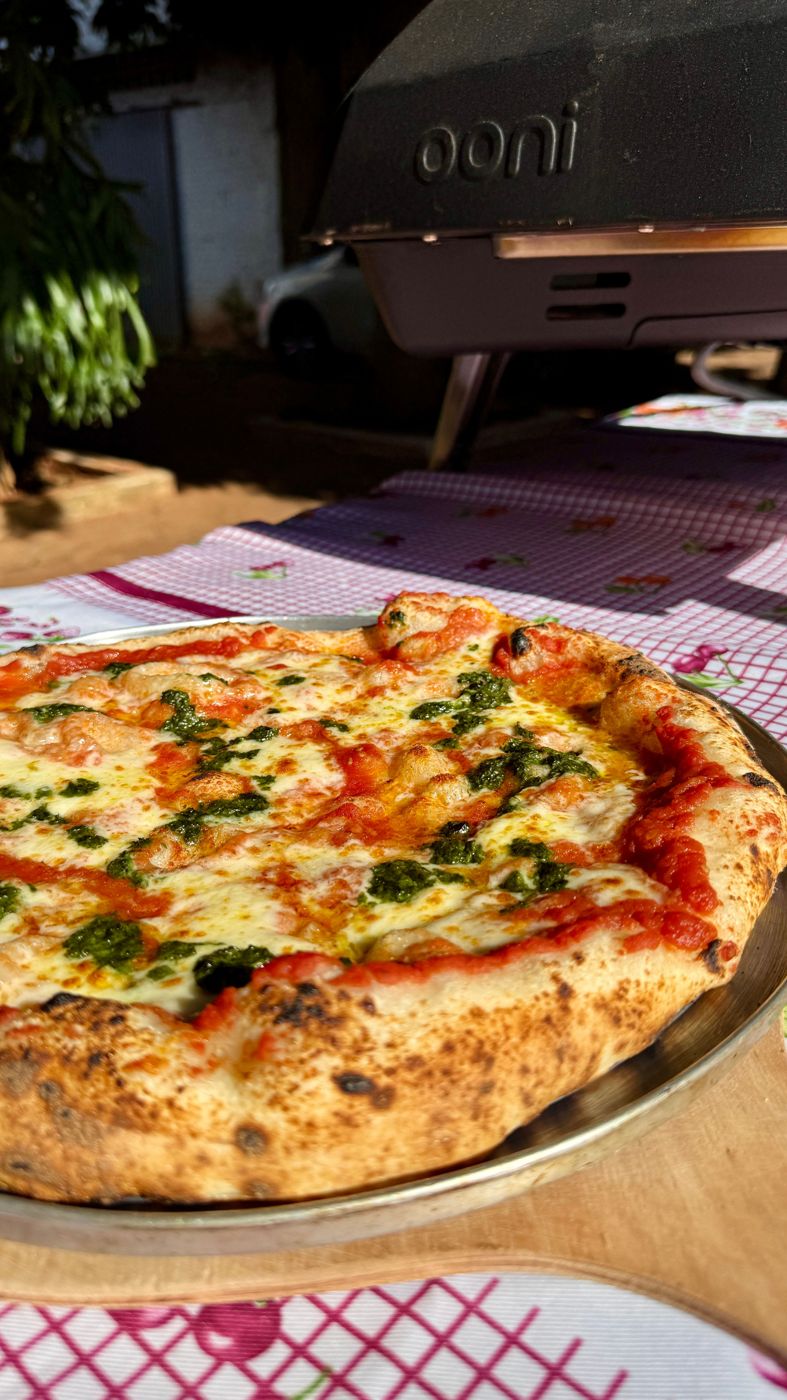
An outdoor pizza oven heats a stone floor to around 400°C or more, while flames roll over the top. The base cooks fast from the hot stone, and the top cooks from the heat above. The result is a pizza that's crisp underneath, soft and airy at the edge, and done in about a minute.
- Speed: once it's hot, you can make pizzas one after another, which suits parties.
- Crust: the airy, blistered crust you get in a good pizzeria.
- Theatre: cooking outside with friends is half the fun.
- Versatility: many ovens also cook steak, flatbreads and roast veg.
The trade-offs
- It costs money, and you need fuel: gas, wood, charcoal or pellets.
- Thin pizzas cook in seconds, so you have to watch and turn them.
- Heavy toppings don't cook through in 90 seconds. Less is more.
- Launching the pizza off the peel takes practice.
Is a pizza oven worth it for you?
- You make pizza once in a while, mostly tray-style: stick with your kitchen oven and add a pizza steel.
- You love thin, pizzeria-style pizza: a pizza oven is the only way to get it at home.
- You host friends and family outside: a pizza oven makes a brilliant centrepiece and feeds a crowd quickly.
- You're building an outdoor kitchen: a pizza oven is one of the most popular additions. See how to plan an outdoor kitchen.
Buying your first pizza oven
- Gas is easiest to start with. Turn a dial, wait 15–20 minutes, and cook. Wood and charcoal give more flavour but need more attention. See wood vs gas vs pellet.
- 12-inch is plenty for most families. A 16-inch oven makes bigger pizzas and is easier to turn them in, but costs more and uses more fuel.
- Budget for a peel and a thermometer. See pizza oven accessories worth buying.
- Check where it'll sit. It needs a stable, heatproof surface. See pizza oven bases and stands.
- Compare models in how to choose a pizza oven, the best pizza ovens under £500 and Ooni vs Gozney.
Pizza ovens at The Range
The Range stocks a wide choice of tabletop gas, wood-fired and pellet pizza ovens, from budget models to larger freestanding ovens, plus pellets and kindling.
Have fun with toppings

Whatever oven you use, pizza night is a great excuse to get creative. For Halloween I carved mushrooms into skulls. They held their shape well in the kitchen oven. In a very hot pizza oven, add delicate toppings like this towards the end of the cook, or after it comes out, so they don't scorch. Get the full Halloween mushroom skull pizza recipe.
Frequently asked questions
Can a kitchen oven make good pizza?
Yes. A kitchen oven is great for tray, deep-pan and well-topped pizzas. A preheated pizza stone or steel near the top of the oven helps a lot. It won't give you the charred, airy crust of a 400°C pizza oven, though.
How hot does a pizza oven get?
Most outdoor pizza ovens reach 400–500°C on the stone. That's roughly double the maximum of a typical kitchen oven.
How long does pizza take in a pizza oven?
A thin Neapolitan-style pizza can cook in 60–90 seconds at full heat. Thicker pizzas need a lower heat and a few minutes.
Is a pizza oven worth it for a family?
If you'd use it regularly, yes. Once it's hot it turns out pizzas very quickly, and everyone can choose their own toppings. If you only make pizza now and then, a pizza steel in your kitchen oven is a cheaper upgrade.

Home cook, keen DIYer and long-time website builder, writing practical outdoor cooking guides for UK gardens. More about me.